Noah Sullivan · 3 October 2026
Policy Reforms Reshaping Regional Literary Communities and Their Activist Ties
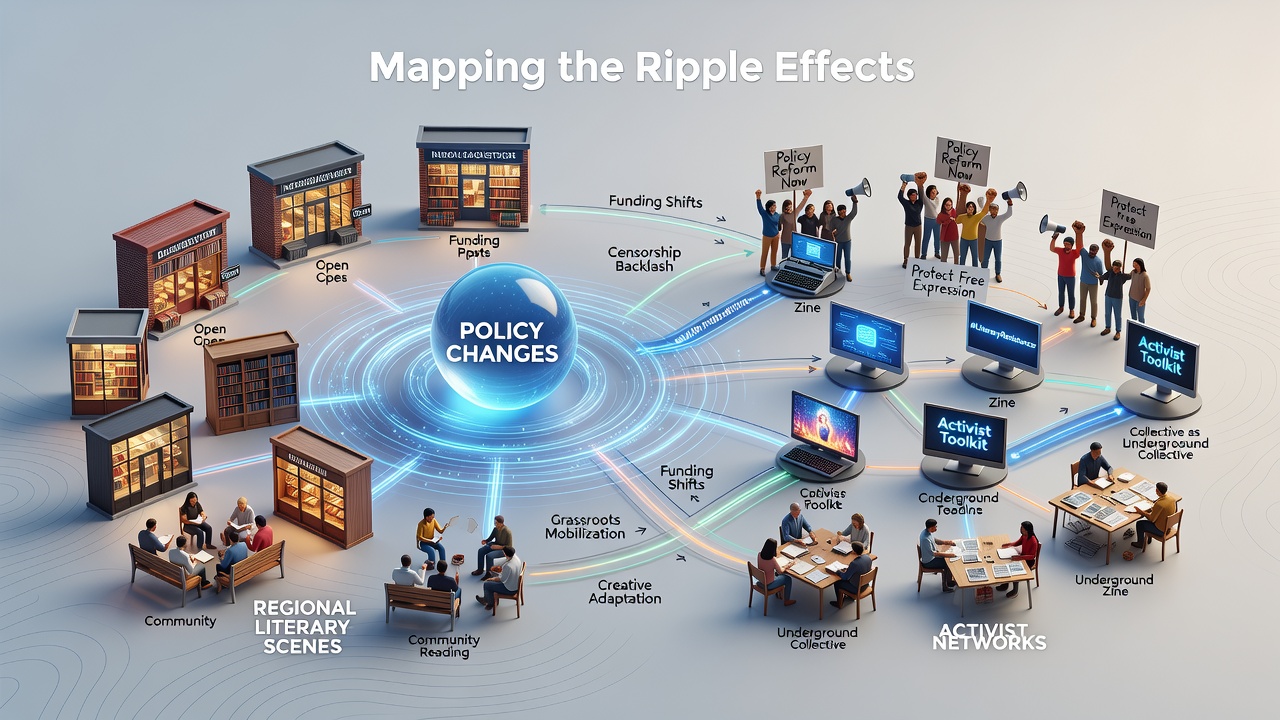
Policy adjustments in cultural funding, content regulations, and public assembly rules have begun to influence literary scenes and activist networks in connected yet distinct ways across multiple regions, with data from government arts bodies showing measurable shifts in event attendance, publication rates, and coalition formations by early 2026. Researchers tracking these patterns note that changes in grant allocations from bodies like the Canada Council for the Arts often correlate with reduced programming in smaller venues, while new assembly guidelines in certain municipalities affect how activist groups organize readings and workshops that blend literature with advocacy.
Those who monitor these developments point to October 2026 as a key period when several regional policies take full effect, including updated digital content rules in parts of the European Union that impact online literary platforms used by activist writers. Studies from academic centers indicate that such timing creates overlapping pressures, where literary festivals must adapt their schedules and activist networks must revise their outreach methods to maintain visibility without violating updated statutes.
Funding Shifts and Literary Venue Adaptations
Regional literary scenes rely on public grants and private sponsorships that fluctuate with broader policy directions, and observers have documented how reductions in state-level arts budgets lead venues to consolidate events or seek alternative revenue streams. In areas where housing policies intersect with cultural zoning, independent bookstores and reading spaces face higher operational costs, prompting some to partner with activist networks for joint programming that draws larger crowds and shared resources. Figures from the Australia Council for the Arts reveal that collaborative models between literary groups and advocacy organizations have increased in frequency over the past two years, particularly in cities where single-discipline funding streams have narrowed.
Community libraries serve as another focal point, since policy changes to public access hours or collection development guidelines directly affect which titles and events reach local audiences. When activist networks incorporate literary elements into their campaigns, such as poetry slams addressing housing rights or memoir workshops on migration experiences, these spaces become hubs for both creative output and organized response. Data shows participation rates holding steady in regions that maintain consistent library support, whereas areas with recent cuts experience noticeable drops in recurring programs.
Activist Networks and Literary Collaboration Patterns
Activist networks often draw on literary production to frame their messages, and policy modifications in areas like protest permitting or online speech regulations can alter how these groups publish and distribute written materials. Researchers have observed that tighter rules on public gatherings push some networks toward digital formats or private reading circles, which in turn changes the visibility of regional writers who contribute essays or spoken-word pieces. This shift appears in multiple locations, with one study revealing that networks in mid-sized cities adapt faster when they already maintain cross-regional connections through shared online archives.
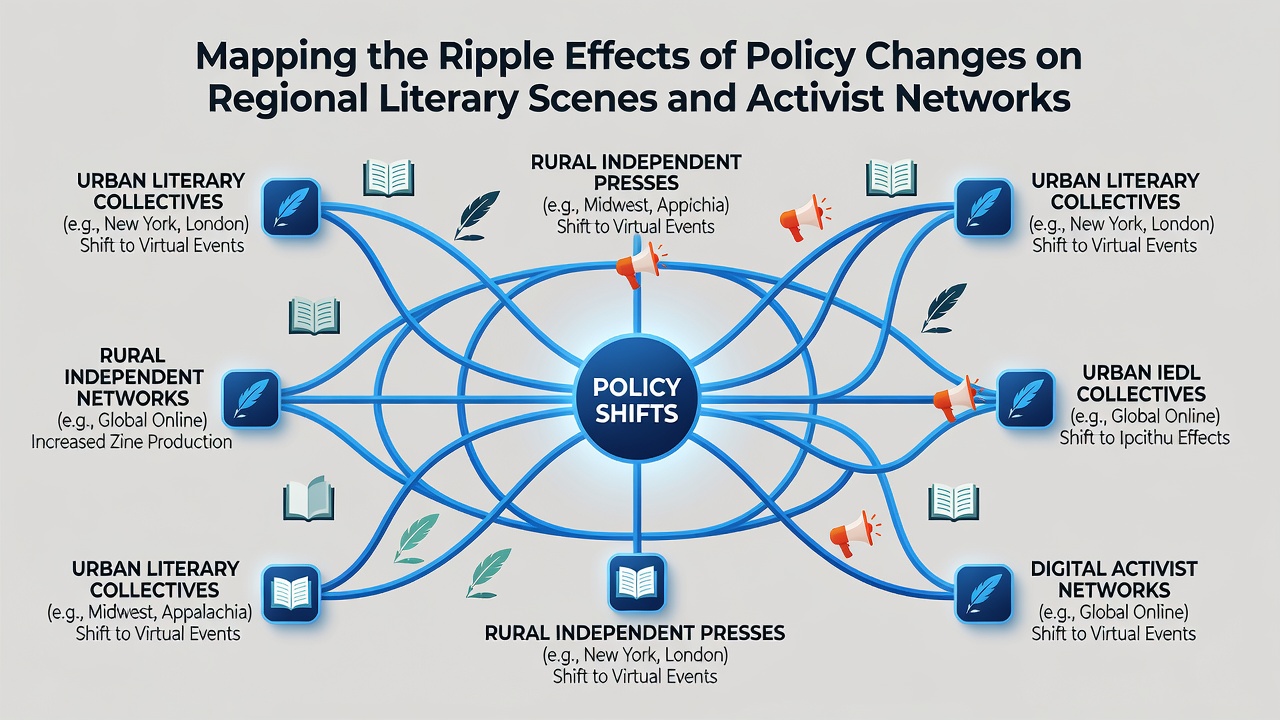
Cross-border exchanges provide additional context, as literary activists in one jurisdiction reference successful strategies from others facing similar policy environments. For instance, groups in North American cities have referenced documentation from European cultural reports when planning responses to funding reallocations, allowing them to anticipate effects on festival lineups and book distribution channels. Such exchanges remain informal yet produce documented increases in joint publications and shared event calendars by mid-2026.
Regional Variations and Data Trends
Geographic differences emerge clearly in available statistics, with coastal regions showing stronger retention of literary events tied to activist causes compared to inland areas where transportation policies raise attendance barriers. Policy changes related to digital access, such as broadband expansion or content moderation requirements, further differentiate outcomes, since activist networks in well-connected zones maintain broader reach through podcasts and online journals. Government reports from varied jurisdictions consistently list these infrastructure elements as variables that either buffer or amplify the effects of direct cultural funding decisions.
Longer-term tracking by independent research institutions suggests that sustained policy stability supports more resilient literary-activist intersections, whereas frequent adjustments lead to fragmentation. In October 2026 several jurisdictions plan simultaneous reviews of these intersecting rules, creating a concentrated window for observing cumulative impacts across literary output and network activity levels.
Conclusion
The connections between policy changes, regional literary scenes, and activist networks continue to evolve through documented patterns of adaptation, resource sharing, and cross-regional referencing. Available data from arts councils and academic sources indicate that outcomes depend on the timing of reforms, existing infrastructure, and the strength of existing coalitions, with October 2026 marking an important checkpoint for updated measurements. These elements together shape how literary production and advocacy efforts proceed in affected areas.